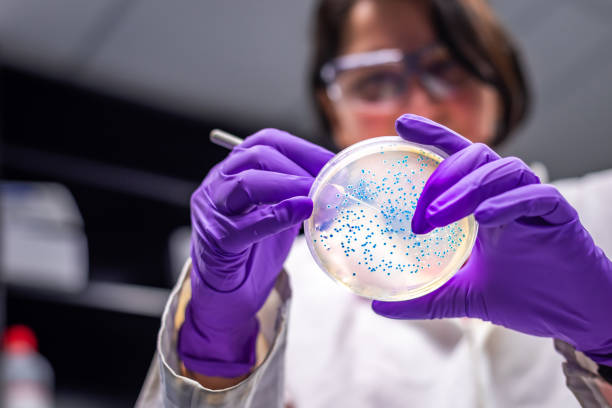
The Master of Science (M.Sc.) in Microbiology is designed for graduates seeking advanced knowledge and research skills in the study of microorganisms and their impact on health, food, and the environment. This programme blends theoretical understanding with practical laboratory experience, enabling students to address critical scientific and societal challenges. By focusing on specialized areas, students gain in-depth knowledge that prepares them for leadership roles in academia, healthcare, industry, and environmental management.
The M.Sc. Microbiology programme offers three distinct specialization areas to cater to professional interests and career goals:
Medical Microbiology & Parasitology
Focus on human and animal pathogens, host-pathogen interactions, and the prevention and treatment of infectious diseases.
Topics include advanced bacteriology, virology, mycology, parasitology, molecular diagnostics, immunology, antimicrobial resistance, epidemiology, vaccine development, and clinical trials.
Food & Dairy Microbiology
Concentrates on the role of microorganisms in food production, preservation, and safety.
Covers the microbiology of milk and dairy products, fermented foods, foodborne pathogens, HACCP systems, probiotics, functional foods, and biotechnology applications in food processing.
Environmental Microbiology
Explores microbial interactions with natural and engineered environments.
Includes soil, water, and air microbiology, biodegradation, bioremediation, wastewater treatment, microbial ecology, biodiversity, and the role of microbes in climate change adaptation.
AWARD TITLE
M.Sc.
START DATE
September 2026
DURATION
2 year
STUDY MODE
Full-time
CAMPUS
Nigeria, Lokoja
Learning Methods:
Advanced lectures and seminars led by experts
Laboratory-based practical training and research projects
Case studies and industry-focused workshops
Field visits to relevant research, healthcare, and industrial sites
Independent and supervised research work
Assessment Structure:
Written examinations and laboratory reports
Research thesis/dissertation
Oral presentations and seminars
Continuous coursework and peer-reviewed projects

Advanced Microbial Physiology: Explores metabolic processes, growth mechanisms, and adaptation strategies of microorganisms.
Molecular Microbiology and Genetics: Investigates microbial genomes, genetic engineering, and molecular tools for microbial analysis.
Medical Bacteriology and Virology: Provides in-depth study of pathogenic bacteria and viruses, their diagnosis, treatment, and control.
Parasitology and Mycology: Focuses on medically important parasites and fungi, including epidemiology and therapeutics.
Food Microbiology and Safety: Examines microbial roles in food spoilage, preservation, and safety standards.
Environmental and Industrial Microbiology: Studies microbial processes in natural environments and their industrial applications.
Epidemiology and Public Health Microbiology: Analyses disease transmission, surveillance, and outbreak management.
Research Methods and Biostatistics: Equips students with the tools for experimental design, data analysis, and scientific communication.
Specialization Electives: Modules tailored to Medical, Food & Dairy, or Environmental Microbiology focus.
Graduates of the programme can pursue careers as:
Clinical microbiologists in hospitals and diagnostic laboratories
Research scientists in universities, government agencies, and private laboratories
Food quality assurance and safety officers
Environmental microbiologists and consultants
Specialists in public health and epidemiology
Industrial microbiologists in biotechnology and pharmaceutical companies


A Bachelor’s degree in Microbiology, Biological Sciences, or a related field with a minimum of Second-Class Lower Division.
Relevant professional or research experience is an added advantage.
Satisfactory performance in an entrance examination or interview, where applicable.
Candidates applying for admission into the postgraduate programme shall satisfy the general University requirements in addition to providing the following:
National Identification Number (NIN)
The course fees you’ll pay and the funding available to you depends on factors such as your nationality, location, personal circumstances and the course you are studying. Visit the links below and scroll down to find the Postgraduate section.
Find out about grants, bursaries, scholarships and living costs in our postgraduate taught fees and funding section.
Our alumni are breaking boundaries and redefining success. Read their stories and get inspired to start your own journey.
Take the first step towards your academic future at Salem University